

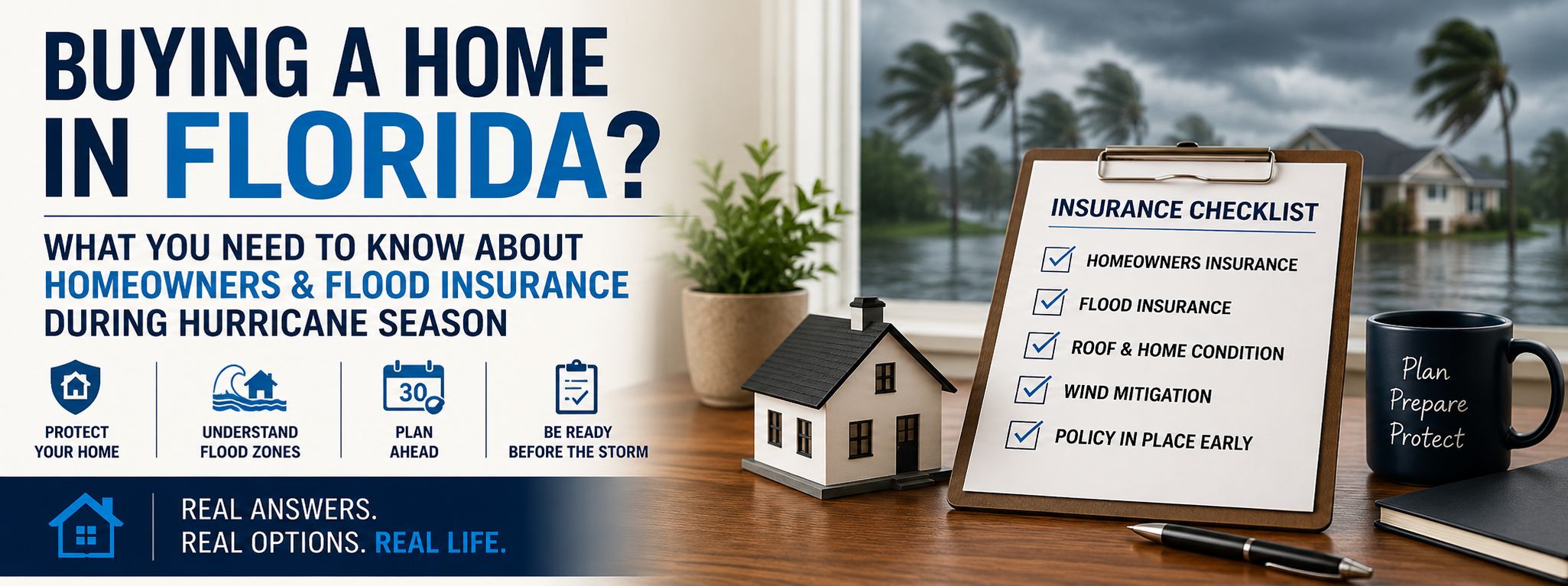
Buying a home in Florida comes with a few considerations you may not encounter in other parts of the country. Homeowners insurance and flood insurance are certainly high on that list—and during hurricane season, when you secure that coverage can be just as important as what coverage you choose.
I recently sat down with JR from Avalon Insurance to discuss some of the biggest insurance questions Florida homebuyers and homeowners should understand.
One issue in particular catches many buyers by surprise: A tropical storm or hurricane doesn't necessarily have to hit Florida to potentially interfere with your home closing.
How Can a Hurricane Affect Your Home Closing?
During hurricane season, insurance carriers closely monitor tropical activity in the Atlantic, Caribbean and Gulf.
As a storm or disturbance approaches an area of concern, insurance companies may temporarily stop writing or binding new homeowners insurance policies. Different carriers can impose these restrictions at different times.
Why does this matter if you're buying a home?
If you're financing the purchase, your lender generally needs acceptable homeowners insurance in place before you can close. If you wait until the last minute to secure coverage and insurance carriers stop binding new policies because of an approaching storm, your closing could potentially be delayed.
This is one reason communication between your lender and insurance professional is so important during hurricane season.
Don't Wait Until Closing Week to Think About Insurance
One of the biggest takeaways from my conversation with JR was simple: start early.
JR explained that policies can typically be set up approximately 30 to 45 days in advance.
From the mortgage side, I don't want insurance to become something we're scrambling to address a few days before closing—especially when there is tropical activity developing.
Getting an insurance professional involved early can also uncover potential problems with the property while there is still time to address them.
What Can Affect a Florida Home's Insurability?
Not every Florida home is viewed the same way by an insurance company.
Several characteristics of a property can affect its insurability and the cost of coverage, including:
- Roof age and condition
- Electrical systems
- Plumbing
- Wind-mitigation features
- The age and overall condition of the home
This is another reason your home inspection and insurance conversations shouldn't be treated as completely separate parts of the buying process.
A home may look perfect during your showing, but its roof, electrical panel or other components could create insurance considerations that ultimately affect your monthly housing expense—or even the available insurance options.
Understanding Florida Flood Zones
Flood insurance is another area where there can be a lot of confusion.
During our interview, JR discussed three flood-zone classifications Florida buyers frequently encounter: VE, AE and X.
VE zones generally represent higher-risk coastal areas with additional exposure to storm-driven waves. AE zones are also considered higher-risk flood areas. Zone X is generally considered a lower-risk area, and a mortgage lender may not require flood insurance based solely on the property's location in Zone X.
But here's the important distinction:
Not being required to carry flood insurance does not mean your home cannot flood.
JR pointed to Hurricane Ian as an example, when homes located in Zone X still experienced flooding.
That is why I encourage buyers to look beyond the question of, “Does my lender require this?”
A better question may be:
“What is my actual risk, and what would happen financially if my home flooded?”
Homeowners Insurance Isn't Flood Insurance
This distinction is extremely important for Florida homeowners.
Your standard homeowners insurance policy and a flood insurance policy protect against different risks. As JR explained during our conversation, rising water is generally not covered by your standard homeowners policy.
That can come as an unpleasant surprise if a homeowner assumes hurricane coverage means every type of hurricane-related damage is automatically covered.
Wind-driven damage and rising floodwater are different insurance exposures and may require different coverage.
Understanding that before a storm is much better than learning it while filing a claim.
What Does Your Mortgage Lender Need?
When you're financing a home, insurance isn't only about protecting the homeowner. The lender also has an interest in making sure the property securing the mortgage is adequately insured.
JR discussed several items that can factor into lender requirements, including appropriate dwelling coverage, replacement-cost coverage, the policy form and acceptable deductibles.
The exact requirements can vary depending on the property and financing, which is why your mortgage and insurance professionals should communicate with one another rather than leaving you to figure out the details yourself.
Already Own Your Home? Hurricane Preparation Still Matters
This conversation isn't only for homebuyers.
JR offered a great piece of advice for existing homeowners heading into hurricane season: know where your insurance documents are and document what you own.
Keep your declarations page accessible and consider walking through your home with your phone and recording a video of your belongings.
If you ever have to file a significant claim, having a record of what was inside your home could be extremely helpful.
And while you're reviewing your coverage, this is also a good opportunity to ask about valuable personal property. Items such as expensive jewelry may have coverage limitations under a standard homeowners policy and may need additional coverage.
The Bottom Line
Florida homeownership is incredible—but hurricanes, flooding and insurance are realities we need to plan for.
If you're purchasing a home, don't make homeowners insurance one of the last boxes you check before closing.
Get your insurance professional involved early. Understand the property you're purchasing. Know your flood zone. Ask what is—and isn't—covered. And during hurricane season, be especially mindful of developing tropical systems that could temporarily affect the availability of new coverage.
The goal isn't to make buying a Florida home more complicated.
It's to identify potential complications early enough that they don't become surprises at the closing table.
If you're considering buying a home in Southwest Florida and have questions about the financing process, I'd be happy to help you put the pieces together.
Kevin Corbett
Gulfside Mortgage Services
941-899-3019
Insurance coverage, availability, underwriting requirements and flood-risk classifications can vary by property, carrier and individual circumstances. Consult with a licensed insurance professional regarding specific insurance coverage and requirements.
Share


RECENT ARTICLES
Free Guides & Resources
Our favorite kind of buyer? A confident one. Brush up on your loan knowledge, get an accurate quote, and let's get to it.



What Our Customers Say